Visualizing the Mindset of Conspiracy Theorists and Designing the Ideal Future
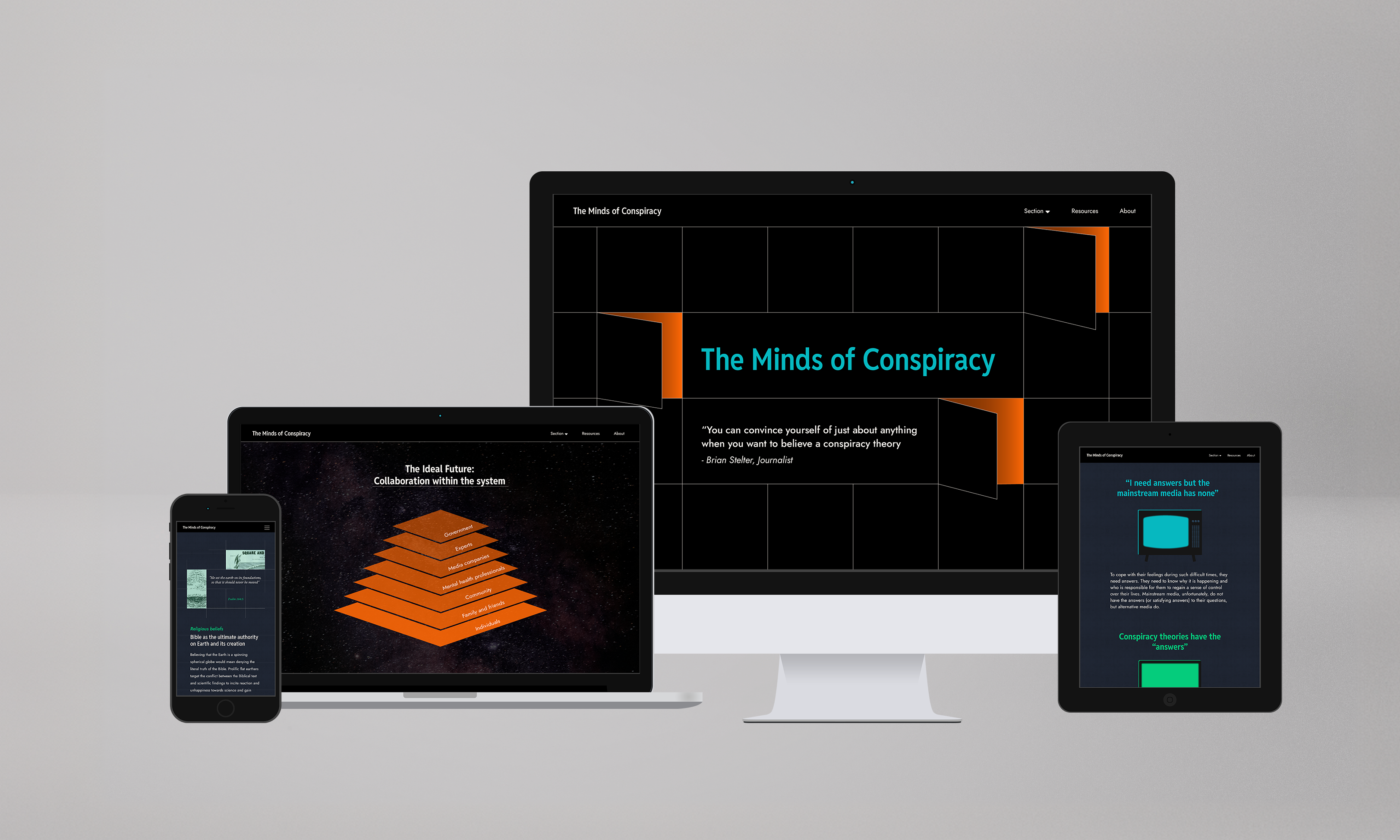
Thesis Research for MFA (Design Research and Development) at Ohio State University
Year: 2024
Tools: HTML/CSS, Adobe Dreamweaver, Adobe Illustrator, Adobe After Effects
Live website coming soon. If you would like to see it, feel free to contact me.
Project Overview
Conspiracy theory has been well-studied over the decades by scholars from sociology, psychology, communication, political science, history, and philosophy. We have a deep understanding of the dissemination of these theories, the mindsets of conspiracy theorists, and the impact on society. However, the knowledge is disjointed, often organized into silos where the different disciplines do not integrate their findings. This makes it difficult for non-experts of the field to understand the knowledge.
This project is a form of initial intervention that leverages visual storytelling and information design to foster a critical and empathetic understanding of the people involved in conspiracy theories. With the aim of demystifying the idea of conspiracy theories and focusing on the psychological and social dynamics that fuel such beliefs, flat earth theory was chosen as a case study as the conspiracy theory in question can be easily debunked. This allows us to focus on the people and the methods of dissemination rather than debating the validity of the conspiracy theory.
Goals
As a designer, the goal of this project is to synthesize and communicate this complex and ever-evolving issue of anti-science conspiracy theory concisely and visually. Designers employ system thinking to see the human behind the system and understand the intricacies of the connections and interactions between stakeholders. Through system thinking, the project aims to breakdown the convoluted information and provide a big picture of the situation to serve as an introductory piece.
My target audiences are non-experts and individuals that are interested in learning and understanding the mindsets of conspiracy theorists, their community and its impact, and in exploring potential actionable steps to prevent conspiracy theories victimization. Strong believers in conspiracy theories are not part of this project’s target audience.
Process
Research
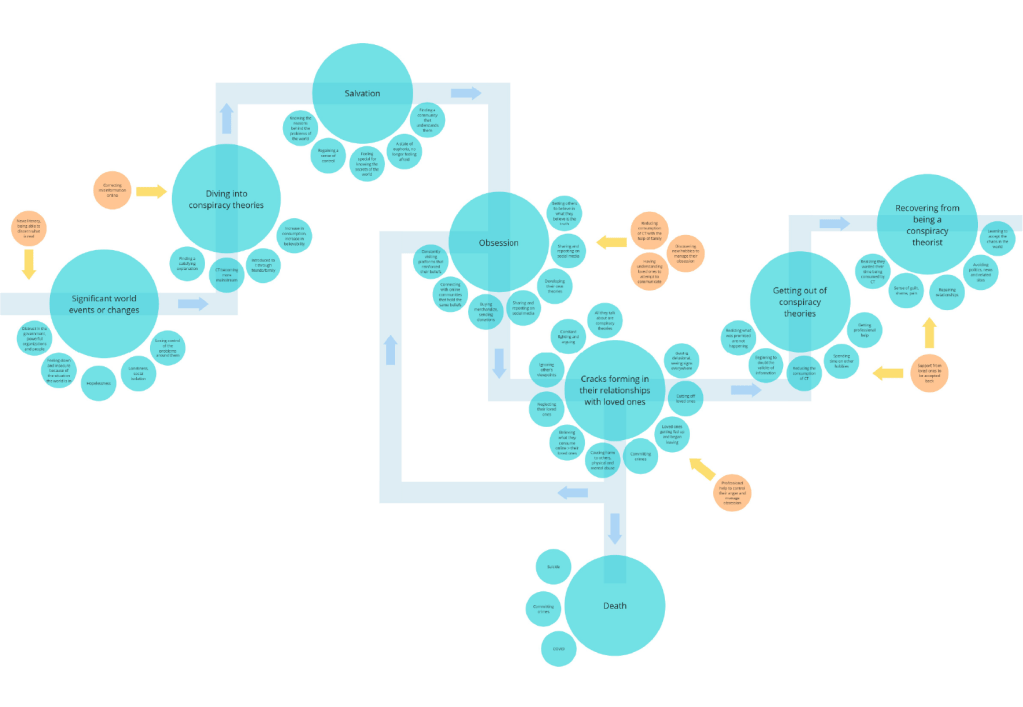
Journey mapping provided an overview of the process of how an individual gets introduced to conspiracy theories, their actions, how it affected their relationships, and how they managed to distance themselves from conspiracy and flat earth theory. Through forums and online posts made by family members and friends of conspiracy theorists discussing their emotions and actions to cope with the situation, I included their involvement into the journey maps.

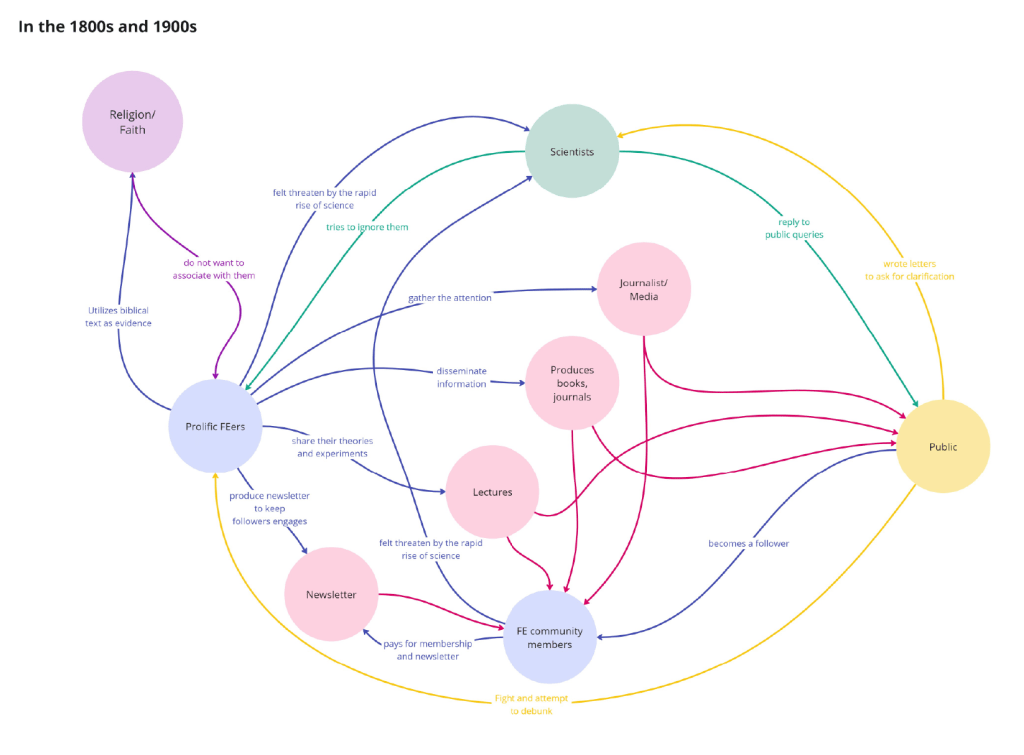
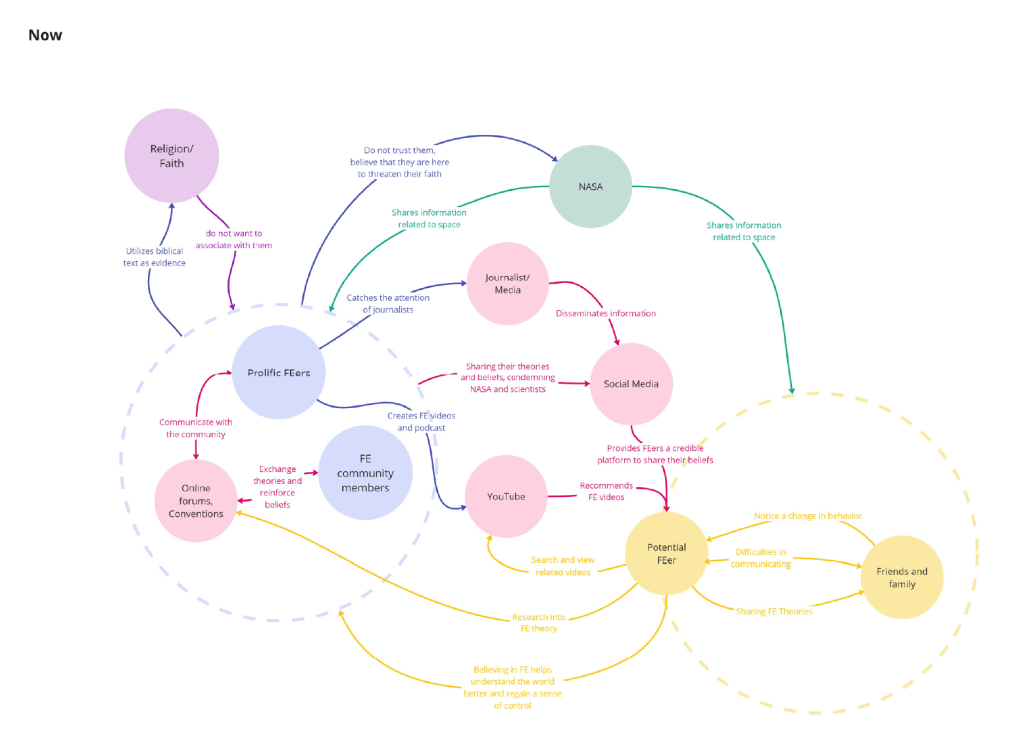
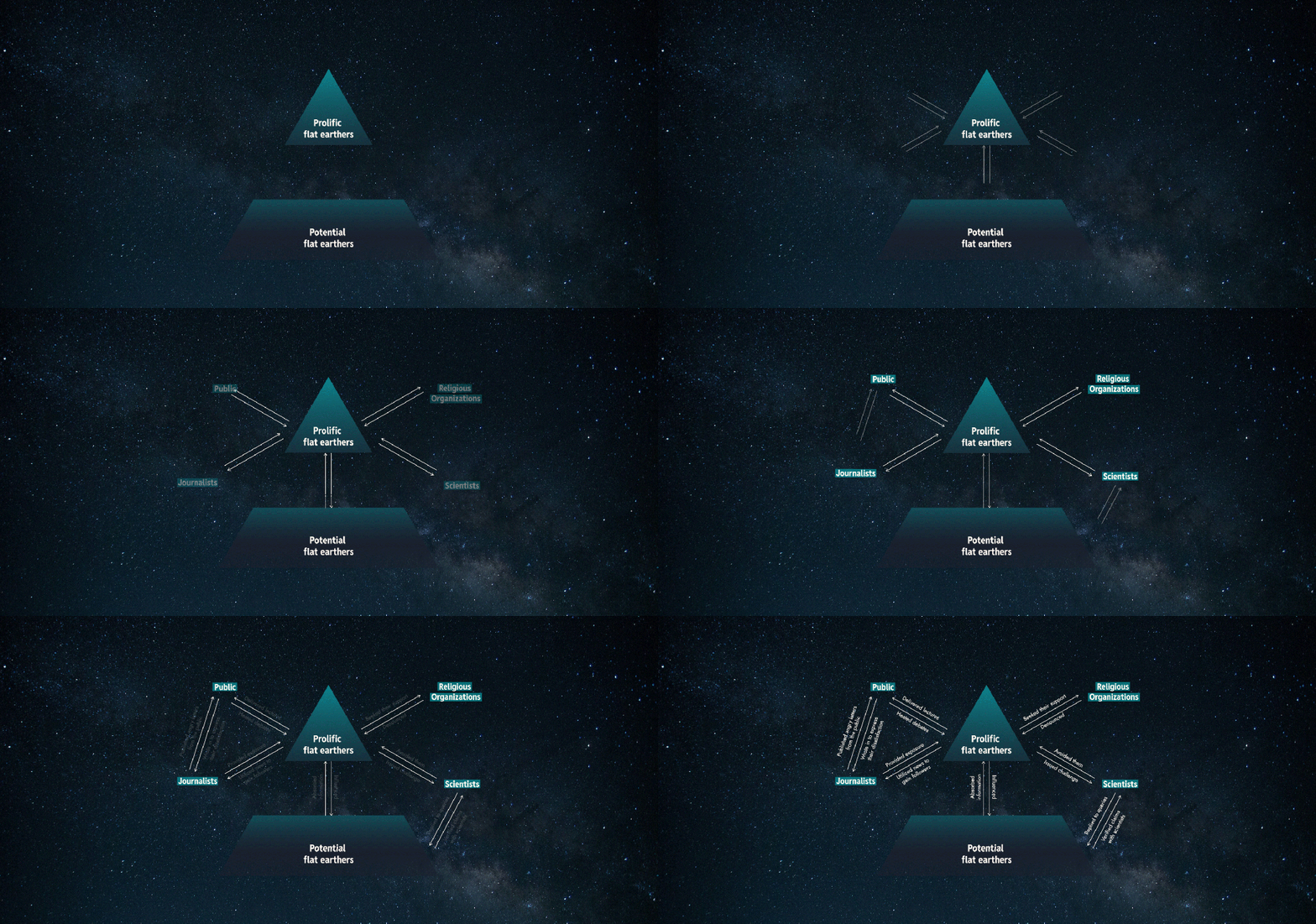
As there are multiple stakeholders involved in the process, I developed system maps to understand the connections and interactions between different groups of people and organizations.
Website
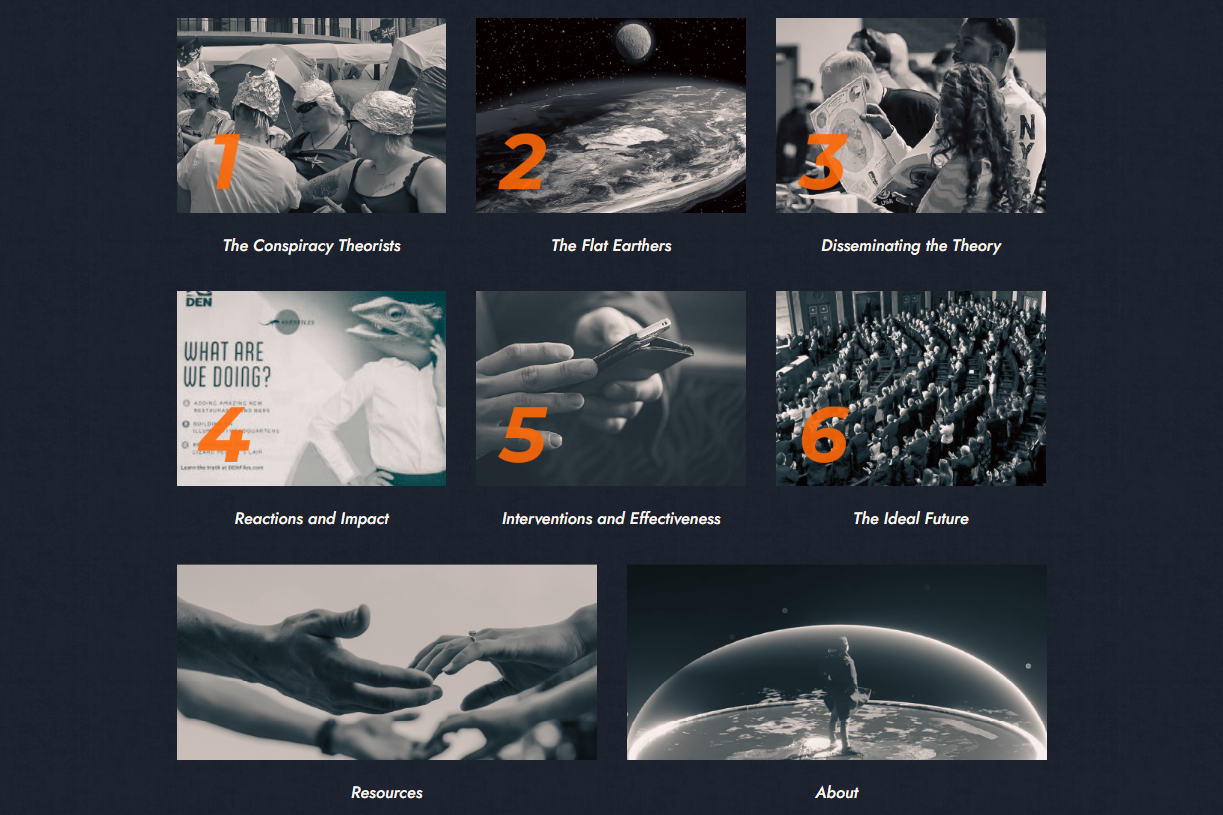
The structure of the site is organized in a manner that is similar to the journey of an anti-science conspiracy theorist, from the headspace they are in when conspiracy theories reach them, what compels them to believe in those theories, to their and their loved ones’ actions, and finally, possible interventions to draw them away from such beliefs. Resources are also provided for readers to gain a deeper understanding of the situation, learn how to minimize their chances of being a victim of conspiracy theories, and support or join communities for those affected.
- The Conspiracy Theorists: An overview of conspiracy theorists
- The Flat Earthers: Flat earthers’ two major ideologies — anti-elitist mindset and protecting their religious beliefs
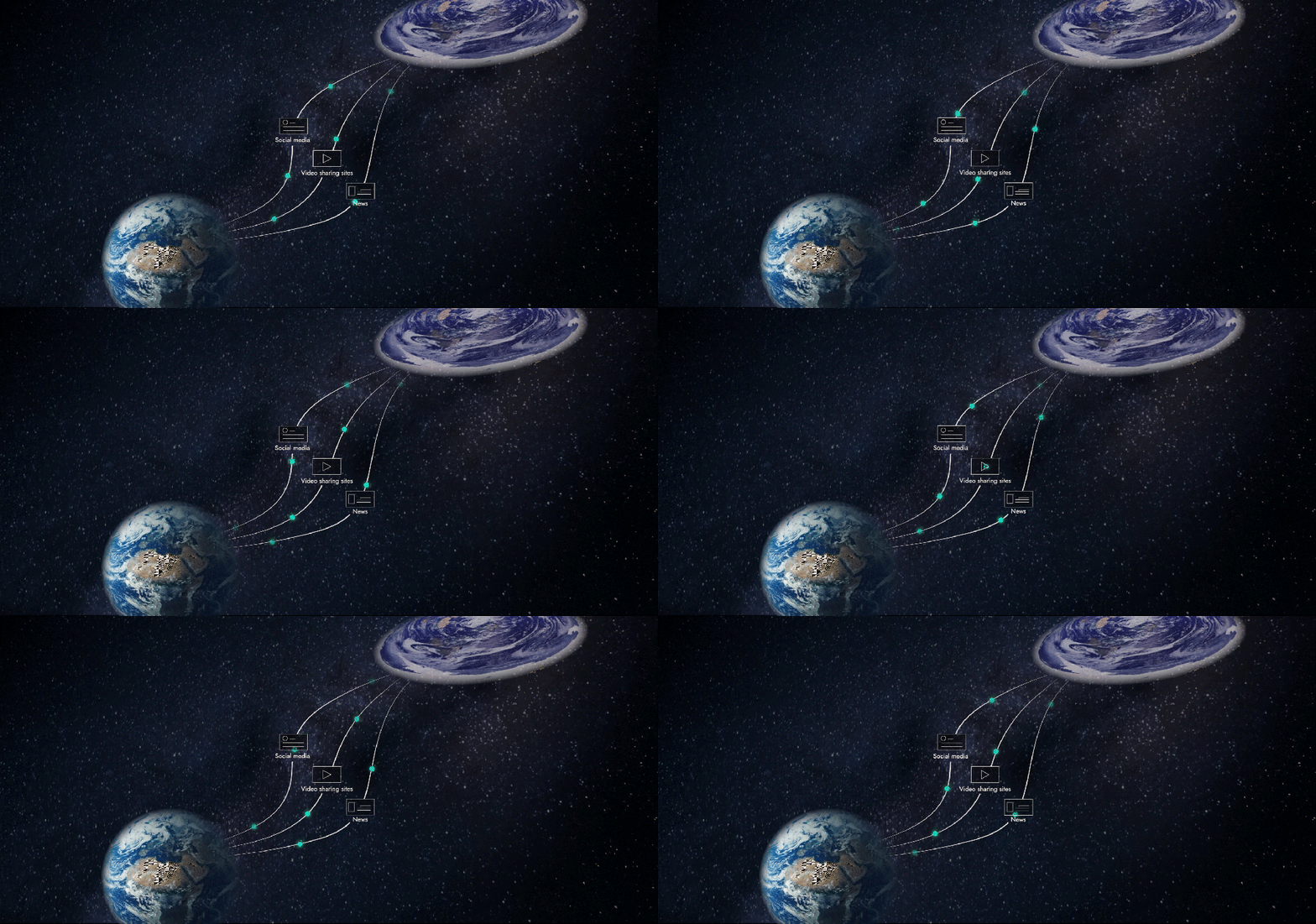
- Disseminating the Theory: How prolific flat earthers who create content and sow discord to stimulate conversations and interactions within and outside the flat earth community
- Reactions and Impact: Reactions by the community and impact on family members
- Interventions and Effectiveness: Four types of interventions targeting both the senders and receivers of conspiracy theories, before and after someone encounters them
- The Ideal Future: An ideal vision of the future developed through backcasting withh both long-term and short-term actions provided to inform potential steps to be taken
- Resources: Sites and content to learn more about conspiracy theories, educate themselves on media literacy, and community support
Visual Language
I developed the visual language of the website with two key directions:
- Educating complex information to non-experts through easily digestible content
- The seriousness of the topic requires the tone to be neutral and factual
Moodboard
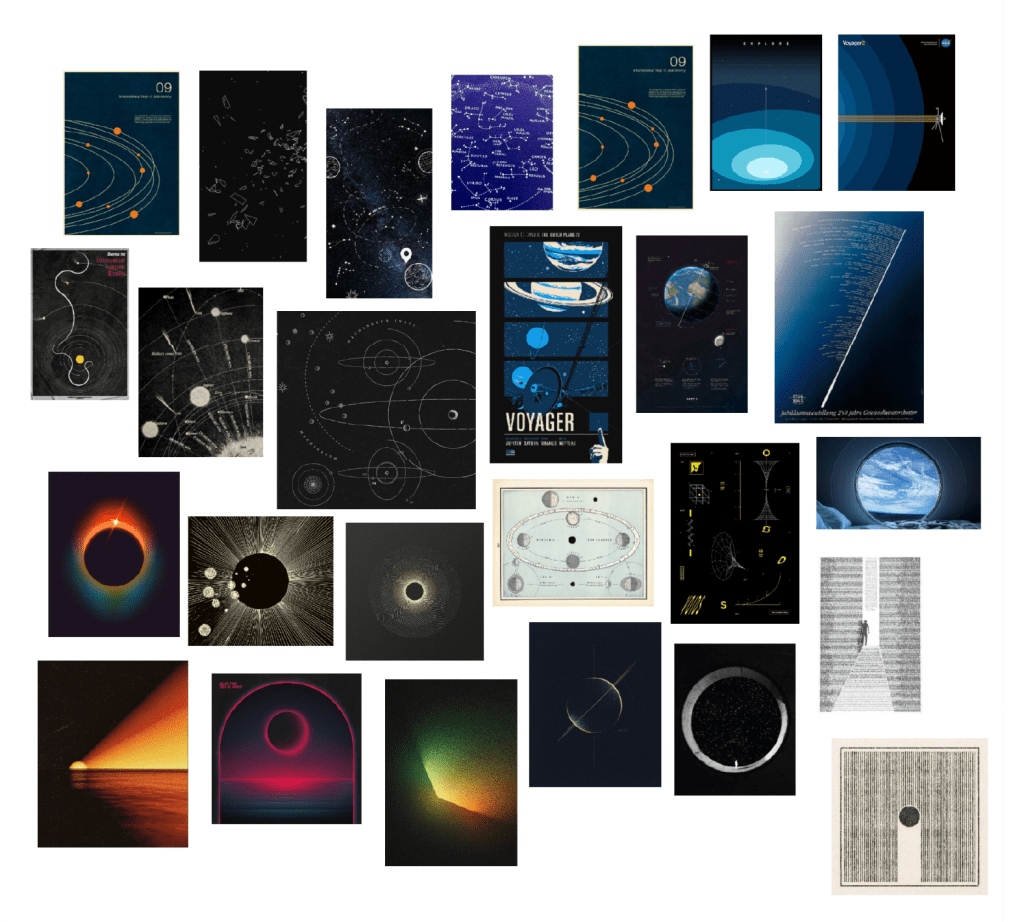
Along with the topic being flat earth, I created moodboard to capture these qualities with outer space-related visuals. Star charts, cosmos-related posters and websites were explored and led to a geometric-centric visual language with thin lines.
The chosen color scheme focuses on contrast against a dark background, similar to the cosmic space, providing a serious atmosphere in line with the topic of conspiracy theory. The design elements used minimize distractions and emphasize the core content of the website, which are the paragraph text, images, and diagrams.
Page Layout
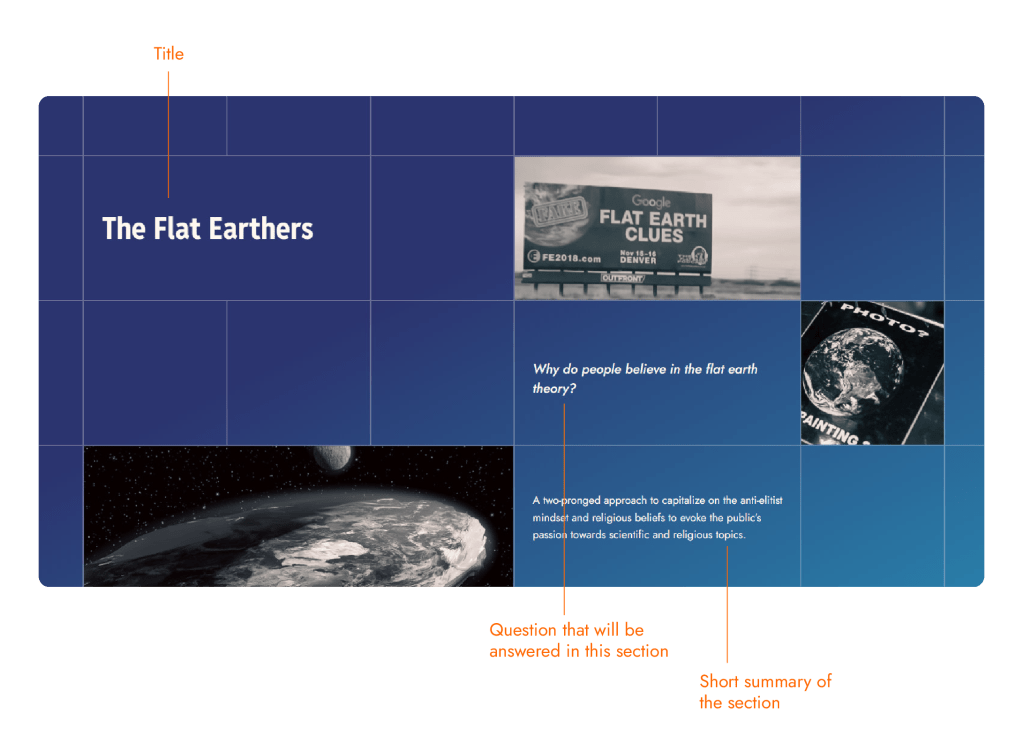
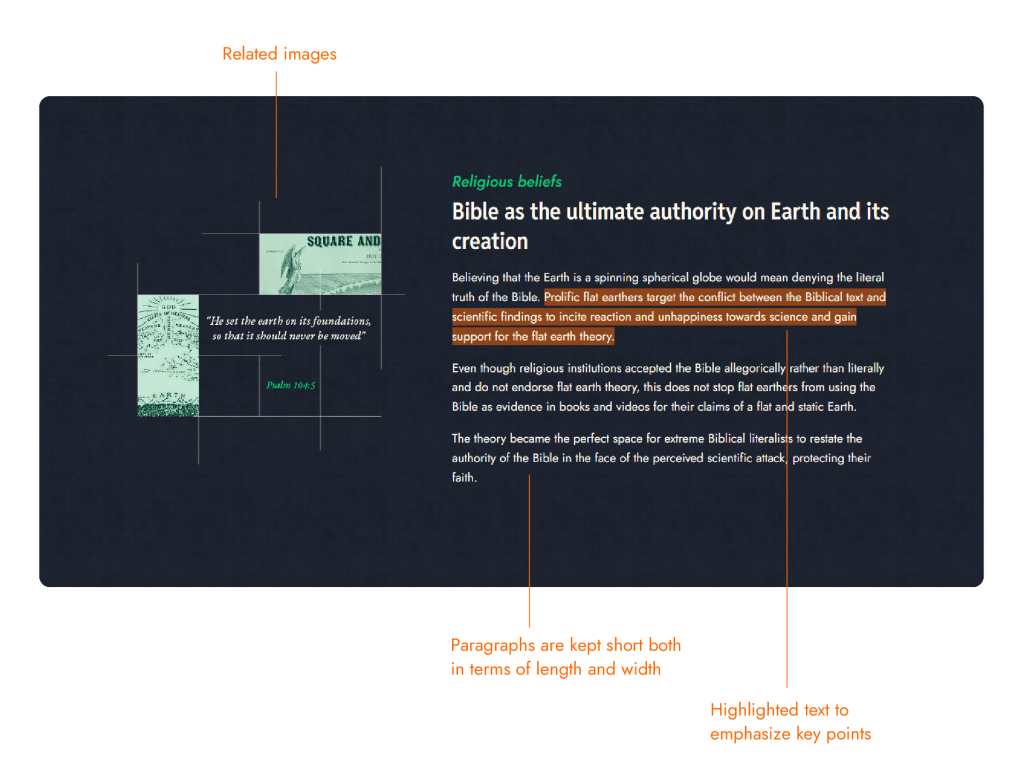
As the information on the website is relatively text-heavy, it is important to ensure the information is not too overwhelming and ends up discouraging users from consuming and reading. Thus, the website is set up with an easy-to-follow grid structure, a clear hierarchy, and paragraphs are kept short.
Imagery
I was originally planning to develop icons and illustrations for the website as I was unable to capture real-life images related to flat earth and conspiracy theories without having to attend related events. However, during the process, I realized that this direction withdrew the severity and realism from the situation. Thus, I used photos and images found online from news sites, documentaries, memes, and stock images related to conspiracy theories from the past and present to provide more relatable and realistic images.

Visualizations
The target audiences of this site are non-experts with various educational backgrounds. It is crucial to avoid unfamiliar jargon that is difficult to understand and provide diagrams to assist in visualizing the complex topic. Visual representations break down complex information into more digestible parts, making it easier for non-experts to grasp the core concepts.
Diagrams can be more engaging than plain text, capturing the readers’ attention and helping readers draw connections between the components involved, illustrating relationships and dynamics more effectively than text alone. Information presented visually is also often easier to remember, achieving better retention of key points and concepts.
Additionally, diagrams can bridge language and literacy gaps, making the content more accessible to individuals with different learning styles and levels of education. For the diverse audience interested in flat-earth theories, this approach is crucial.
 Jennifer Lim