Understanding the possibilities of research across disciplines through a co-design workshop with faculty members and administrative staff of The Ohio State University (OSU)
Year: 2023
Tools: Co-design
Team: A class of 13 graduate students led by Dr. Elizabeth Sanders
Project Overview
In this graduate-level design research course, students explored the current state of transdisciplinary research at OSU, and facilitated a large co-design workshop to discover opportunity areas to elevate transdisciplinarity in the future.
My roles in this class project were conducting interviews with faculty and staff at OSU, preparing for and facilitating the co-design workshop, and analyzing and organizing the research findings into an easy to digest booklet.
Goals
By bringing OSU faculty, administrators, students, and staff together, the goal of the project was to utilize a co-design approach to explore various ideas to improve collaboration in research between the academic disciplines. Literature review and interviews were conducted beforehand to gain a better understanding of the current situation and assist in developing tools and materials to effectively facilitate the co-design workshop.
Process
Preliminary Research
My group focused on the organizational level and explored the culture of collaboration at OSU, leadership, impact, and facilitation of transdisciplinary research. Through literature review and interviews, we discovered that organizational structure and reward system are the key barriers as they do not sufficiently support and recognize transdisciplinary efforts.
Co-design workshop
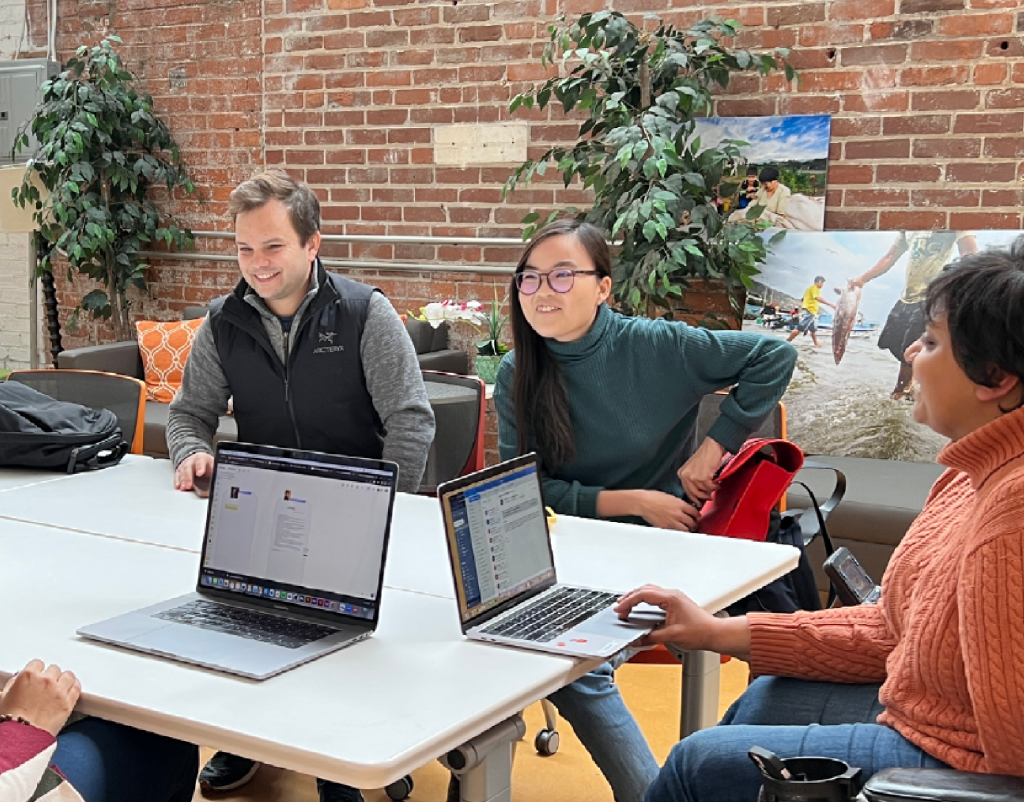
With the findings from the preliminary research from all three groups, the whole class developed and planned the co-design workshop. Participants were split into diverse groups based on their collaboration style and began to envision the possible future and how to reach them.
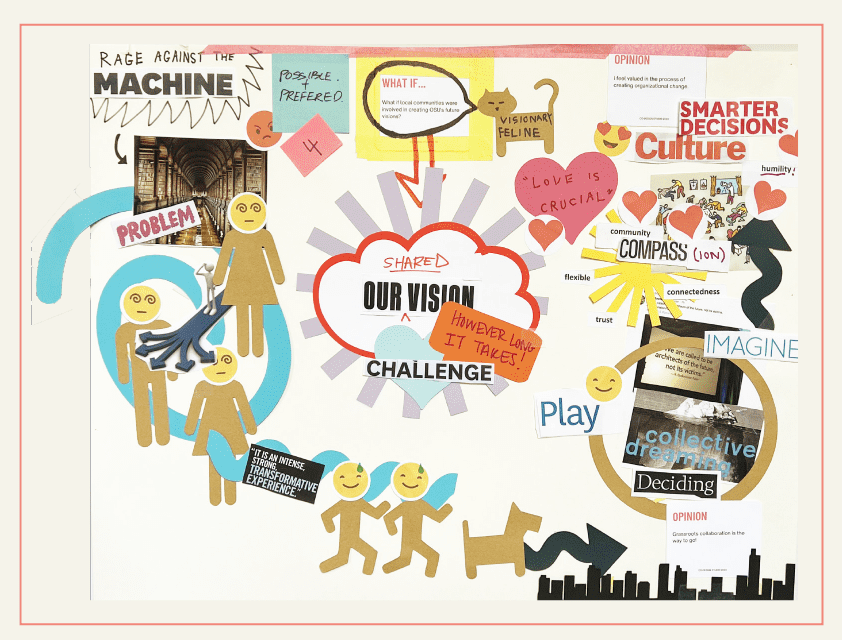
Each group was provided with a toolkit containing paper shapes, photos, words, emotion stickers, 3D objects, and colored tapes. A deck of “What if?” and Opportunity Cards were also provided to help facilitate conversations within the group. The toolkit served as a common language among the diverse group of participants from different disciplines and perspectives.
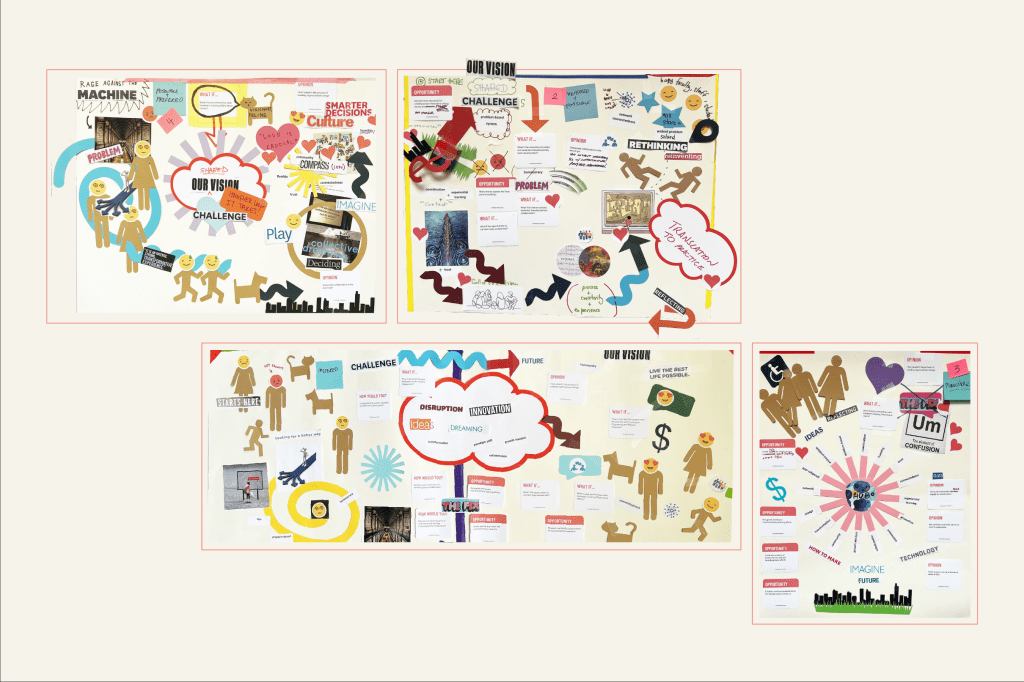
Insights
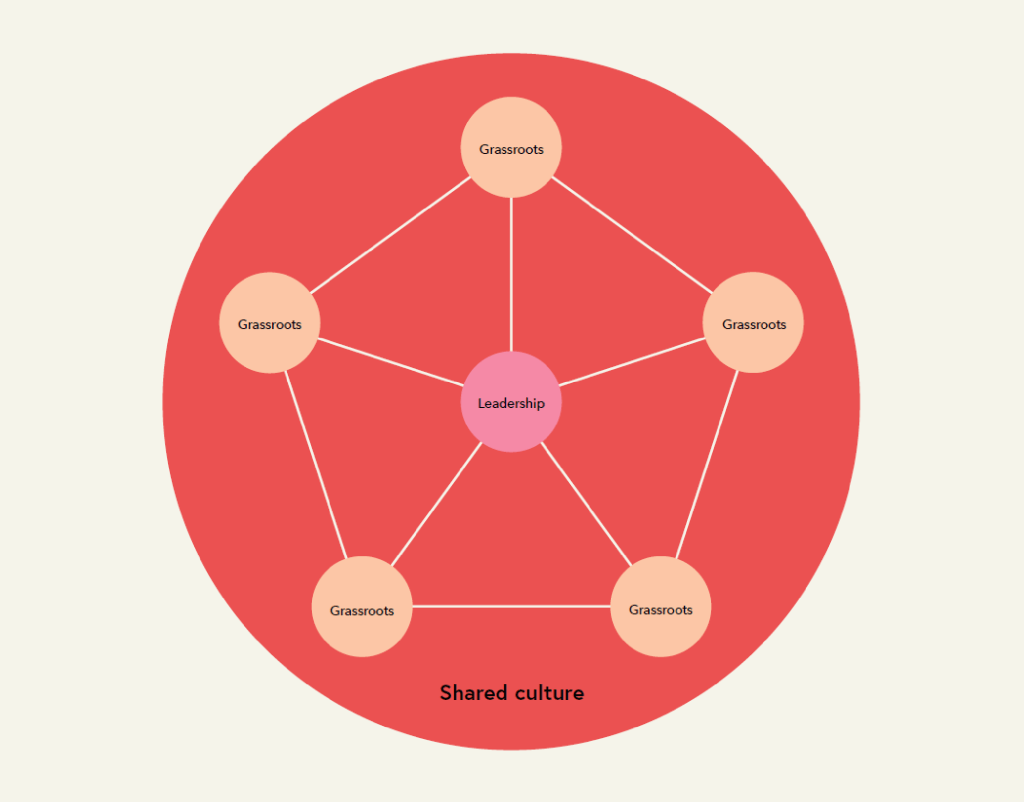
After analyzing the workshop data, we discovered that there are two distinct cultures that exist and communication between these two cultures is insufficient. Communication flows are not equal between the leadership and grassroots cultures and between different grassroots organizations.
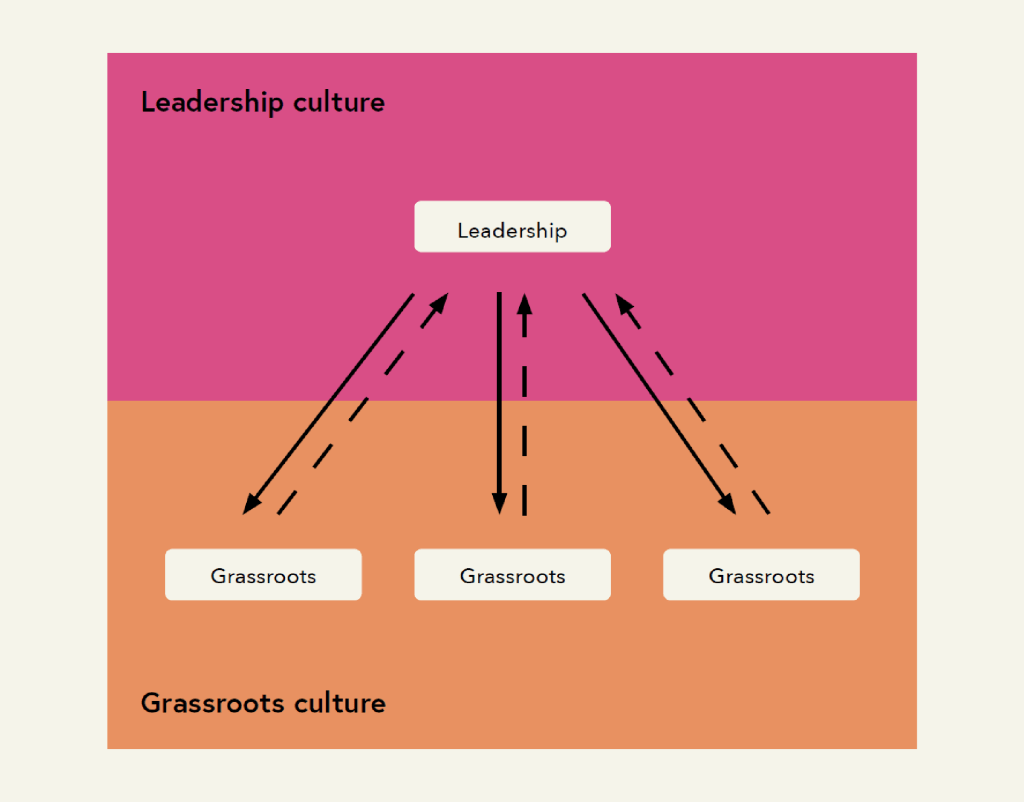
For the future, a shared transdisciplinary culture was envisioned by the participants. Communication is seamless across different silos and departments to foster effective collaboration. Leadership plays a central role in shaping this culture by connecting grassroots organizations and promoting and supporting cooperation.
We identified opportunities for management and leadership. For example, multiple tracks for tenure are needed and collaborative projects need to be better recognized within tenure evaluations. Training is needed to prepare all those that are involved in collaborative work to improve conflict management, active listening, and inclusive communication.
We also need to implement training for leadership to learn, implement and promote a leadership/growth mindset as well as transdiciplinary collaboration. And finally, individuals need to communicate how their research and work are grounded in love, humility, and compassion.
 Jennifer Lim