Envisioning the future of off-campus living with stakeholders
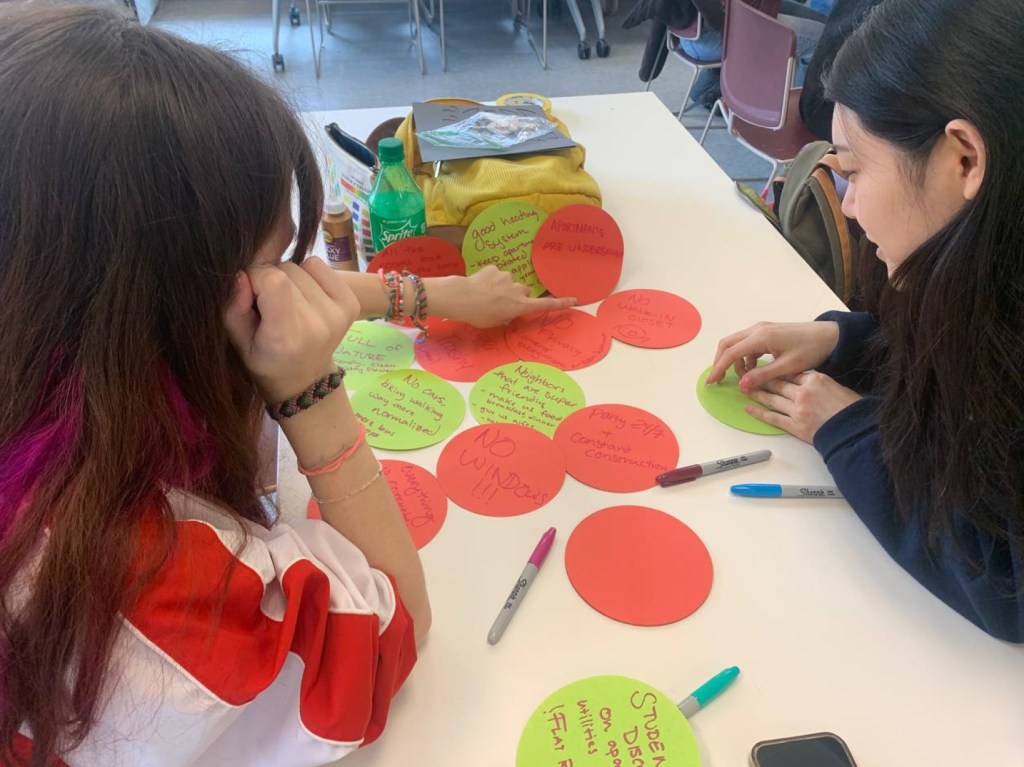
Year: 2022
Tools: Journey mapping, Co-design
Team: Priyanka Tewani and Mahkameh Mallazadeh, class led by Dr. Elizabeth Sanders
Project Overview
The areas around The Ohio State University are constantly developing, with great plans to improve student living with more eateries, apartment complexes, and community spaces. This graduate-level design research course sought to explore what life could be like for people who will live in these neighborhoods in the future (10 to 15 years from now) by engaging directly with current residents.
Goals
Students often settle for what is offered as they only have plans to live in the area during their studies and thus, our team decided to focus on the quality of life of students living off-campus. Intrigued by the idea of design fiction which is aimed at creating, exploring, and criticizing possible futures, our team explored how co-design and design fiction can be integrated and used to create a space for discussion on the need to improve off-campus living situation.
Process
Online survey
An online survey was conducted to gather insights on the current fears and hopes for living off-campus. We sent the survey out to undergraduate and graduate students in OSU, living both on and off campus. Some of the pain points expressed were high rent, safety, lack of green spaces, struggles in finding an apartment, and a sense of community.
Co-design
With the findings from the survey, we developed a co-design workshop centered around creating future stories of students living off-campus and how they manage their struggles. Five undergraduate and four graduate students were invited to participate in the workshop.
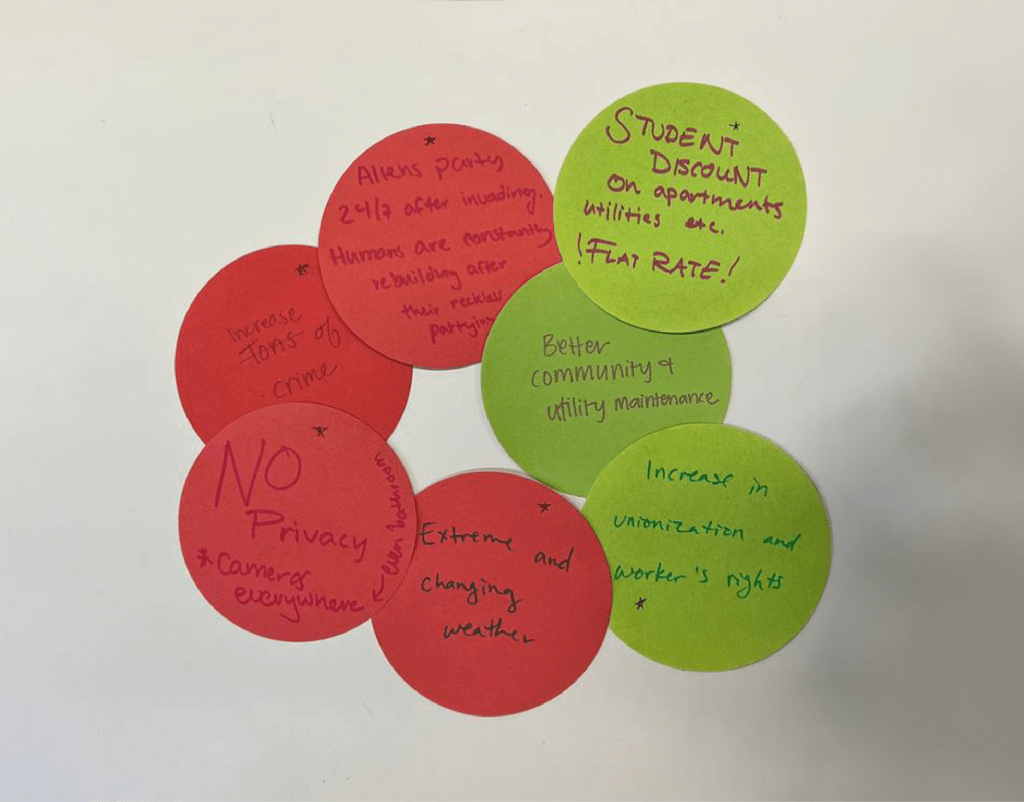
During the workshop, they wrote down their desires and fears to create utopian and dystopian cards. Additional utopian and dystopian cards had been created by our team based on the insights of the survey. With these cards, in addition to future technology cards, the participants were divided into three groups and each group envisioned (in the form of a journey map) a day of a student studying and living off-campus in the future. A character sheet was provided to guide their story.
Findings
After analyzing the data from the stories created, we further discovered the key desires and struggles the students felt about the future. While their stories generally portrayed students who were satisfied with their living conditions, it was because they had learned to manage with not having everything they desire. For example, they would take up a part-time job to afford rent, suffer from the lack of stable living conditions, and share a space with multiple roommates.
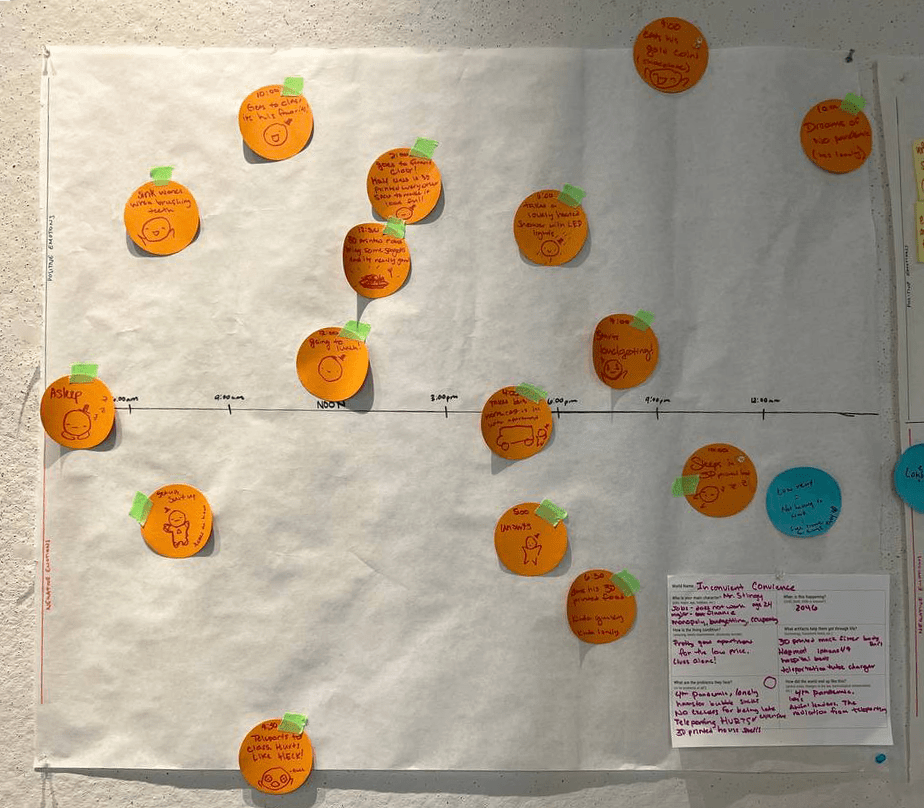
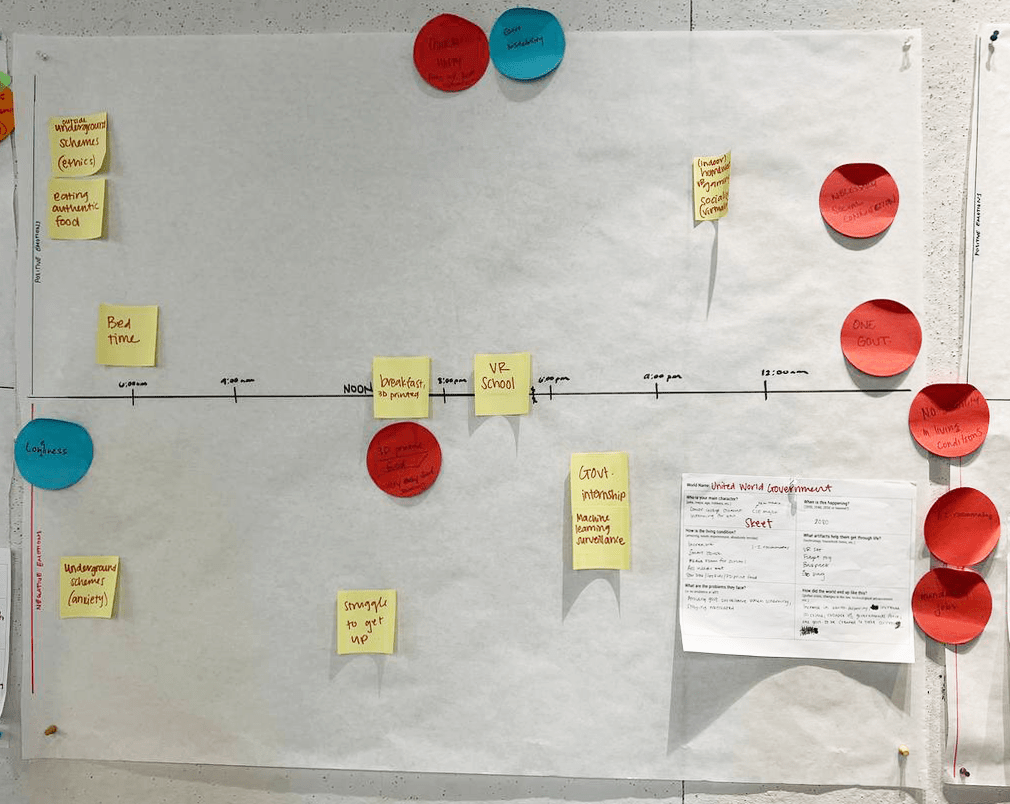
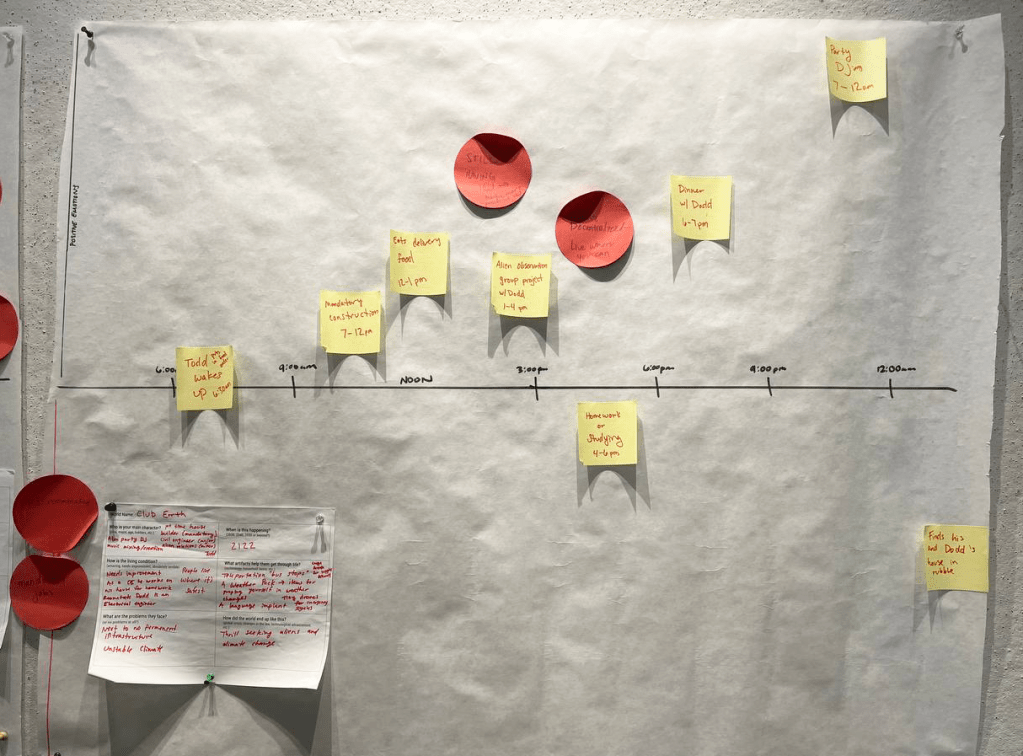
Combining the stories developed by the three groups, our team created a story along with simple graphics about a seemingly absurd, yet relatable, future world of studying and living off-campus. We aimed to let our audience view it from a third person perspective and draw parallels between the future and current reality in order to invoke discussion about the need to improve current living conditions for students.
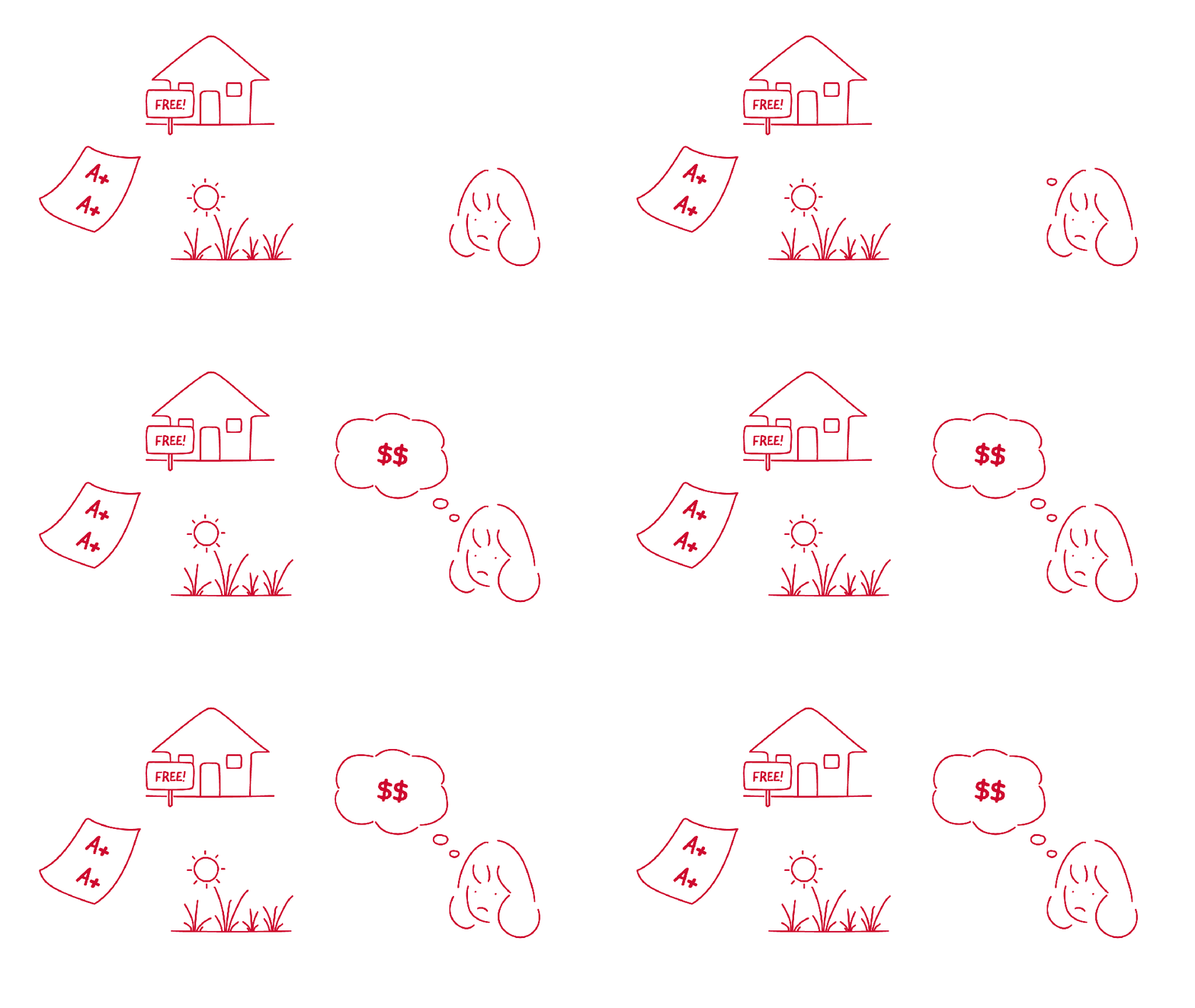
In the year 2040, jobs are offered to students alongside with course credits, free housing, and on-site job experience. There will be no pay but it does not matter as long as they can study without having to worry about pay!

In the year 2050, green spaces are cleared for factories and there are very few spaces for people to live. Students are assigned living spaces based on their departments and “unpractical” majors are treated poorly.
 Jennifer Lim